Three Questions to the Curator
The curators of SONIC MATTER asked each other three questions each about what drives them to curate the platform and the festival.
LISA NOLTE: The 2023 festival edition is, in a sense, a conclusion: we are ending the three-year pilot phase with which SONIC MATTER 2021 started - with a lot of energy, ideas, wishes for experimenting with sound, sometimes perhaps a little naïve. Before the idea for SONIC MATTER even came about, you had already been working as a composer and educator for a long time. What inspired you to create an additional festival? To what extent do your curatorial and artistic activities influence each other?
KATHARINA ROSENBERGER: Curatorship has fascinated me for a while and the interest in that task grew, after I have had the chance to curate musical events in various places and - curious enough - a video and light art show in San Francisco.
Also I just love the format of festivals, the intensity of appreciating music or art, the density of stimulation and sensory stimuli, the mingling and exchange with people. In 2019 I had a job interview, and the question arose, if I had a wish, besides composing and teaching, what would it be? I immediately prompted, without thinking much - running a festival! And there you go, one year later, you and I were contemplating, if we should respond to the City of Zurich’s call for initiatives for a new festival of contemporary music for Zurich or not. Well, I am so glad we did!
It offers me immense satisfactions to support artists and their work, particularly offering visibility to those that have not yet played at every corner, or artists that don’t have the means to travel so easily to Switzerland. It means to offer our audiences real discovery.
KATHARINA ROSENBERGER: SONIC MATTER, a platform for experimental music, is ending the three-year cycle of the pilot project with the festival theme «LEAP». What was the most important insight you gained?
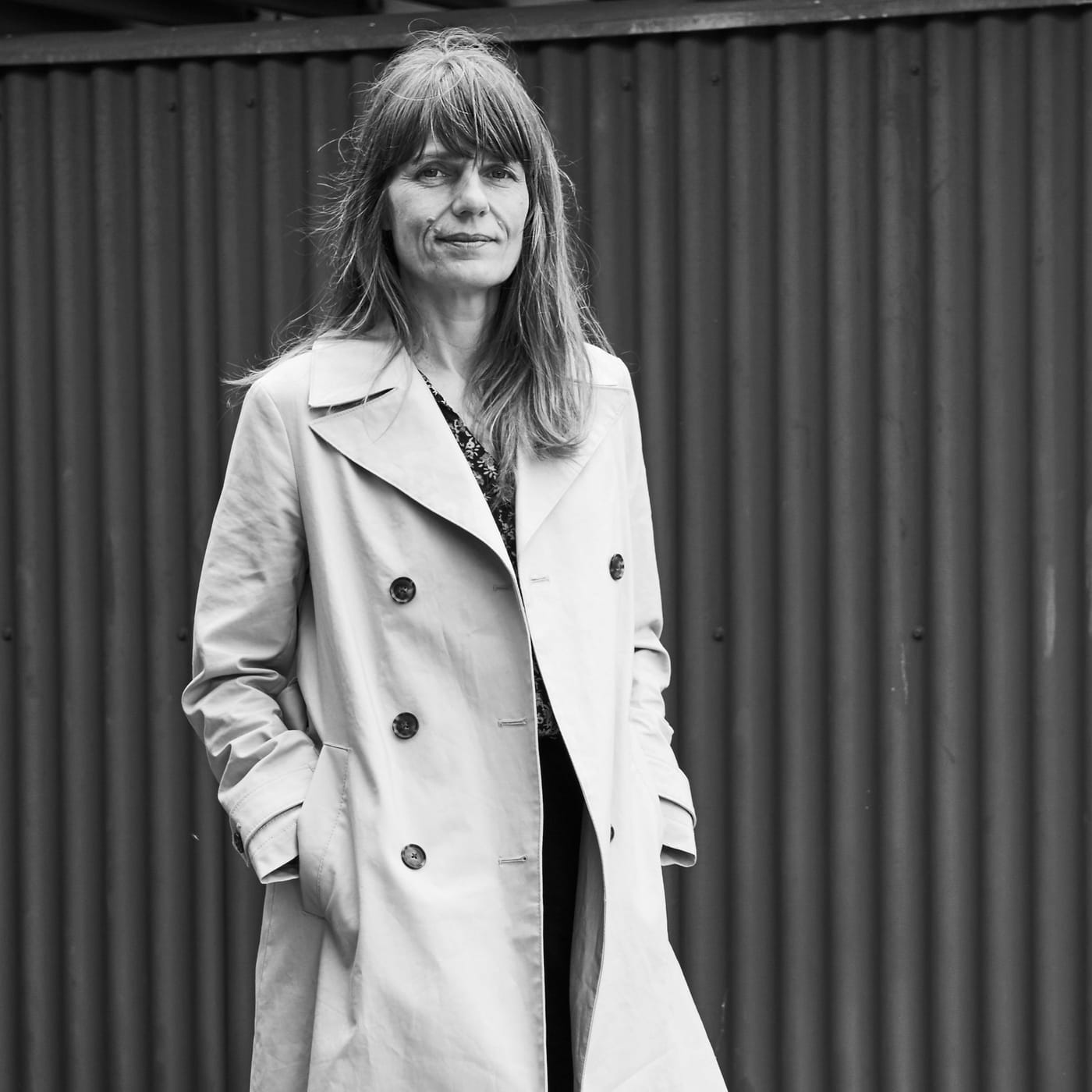
Katharina Rosenberger (Bild © Kaspar Ruoff)
LISA NOLTE: I couldn't even name the one most important insight. For the platform's not entirely unambitious aim of making art from other regions of the world accessible to the audience in Zurich, not as an exhibition piece, but as an expression of life in other parts of the world, a central experience was that more and more time is needed. Time to get to know each other, time to deal with the different expectations and needs that come together, time to develop the right framework together. Our approach to this in the pilot phase was an annual geographical focus. An admittedly somewhat helpless experimental balloon, which is of course an exorbitant generalization. This is particularly clear this year: the focus is on West Asia and we have artists from various coutries in the region. This focus has been solid for four years - and yet there has not been enough time to prepare for a situation like the one we find ourselves in today.
LISA NOLTE: The SONIC MATTER Festival focuses on artistic contributions from a different region every year. A question that I often ask myself: What is the point of such a geographical focus?
KATHARINA ROSENBERGER: We Europeans were very focused on our own circles of European artists, as well as those who left their homelands to study or live in Europe. I am very curious and eager to explore other hotspots in the experimental music scene, in places around the world where artists work and live under entirely different circumstances than us, sometimes facing drastic challenges, whether economic or political. How do these artists maintain their strength, motivation, and hopes to continue their work?
How do they express themselves artistically in their environment and the society they live in? It is immensely enriching to bring together these diverse communities of musicians and have them perform on the stages of SONIC MATTER. This year, our audience will have the opportunity to experience very special composers and performers from Lebanon, Iran, Turkey, Kenya, Rwanda, Belgium, the Netherlands, and many other countries.
KATHARINA ROSENBERGER: Contemporary classical music is an art form often perceived as a niche. For inexperienced listeners, it may appear unfamiliar, while among experienced audiences, there are varying opinions due to the wide range of different styles and aesthetic directions it encompasses. Given this complex dynamic, what key aspects would you attribute to a successful curatorial approach in order to not only provide the audience with a deeper understanding but also to instill a contagious enthusiasm for contemporary music?
LISA NOLTE: The idea that one must «understand» music to appreciate it has always perplexed me. It places extreme pressure on all parties involved, from the artists to the audience, and is a particular characteristic of contemporary classical music.
The persistence of this idea can perhaps be explained by the genre's emergence in the 20th century, where composers were compelled to assert their right to individuality and complexity. Is it too casual to accuse them of taking the bait? I believe that complexity is essential. Without it, the fantastic diversity you mentioned above would not be possible. However, the complexity that contemporary music often carries within itself is frequently transferred directly into the vocabulary used to discuss it. In doing so, it has to some extent maneuvered itself into a niche, and I get the impression that some of its protagonists quite like it there. This niche is situated in academia, which is a seal of quality and, at the same time, an extremely exclusive place. But listening is a very intimate experience, whether in a seated concert where the opportunity must exist to completely immerse oneself in the sound or while dancing, where everyone should feel free to let go completely. This intimacy is not possible when there is a prevailing impression that one can misunderstand or mishear a work, or that they don't fit into the context in which it is being performed. For me, the success of curation can be measured, among other things, by the ability to create listening situations in which everyone interested in an event feels invited to experience the music in their own way.
Conversely, SONIC MATTER is not a platform for contemporary classical music – whatever that term may still mean today. It is explicitly about «experimental» music, regardless of the stylistic direction. If SONIC MATTER can serve as a space in which sounding experiments can fully unfold, that would also be a curatorial success.
LISA NOLTE: Over the first three editions of SONIC MATTER, the thematic triad has been «TURN – RISE – LEAP». This year's theme, «LEAP», suggests the existence of distances and unpredictabilities, but also their exploration or overcoming. Where do you see the most powerful «LEAP» in the festival programme, and where do you see a bold one? And in what direction is SONIC MATTER moving with this year's «LEAP»?
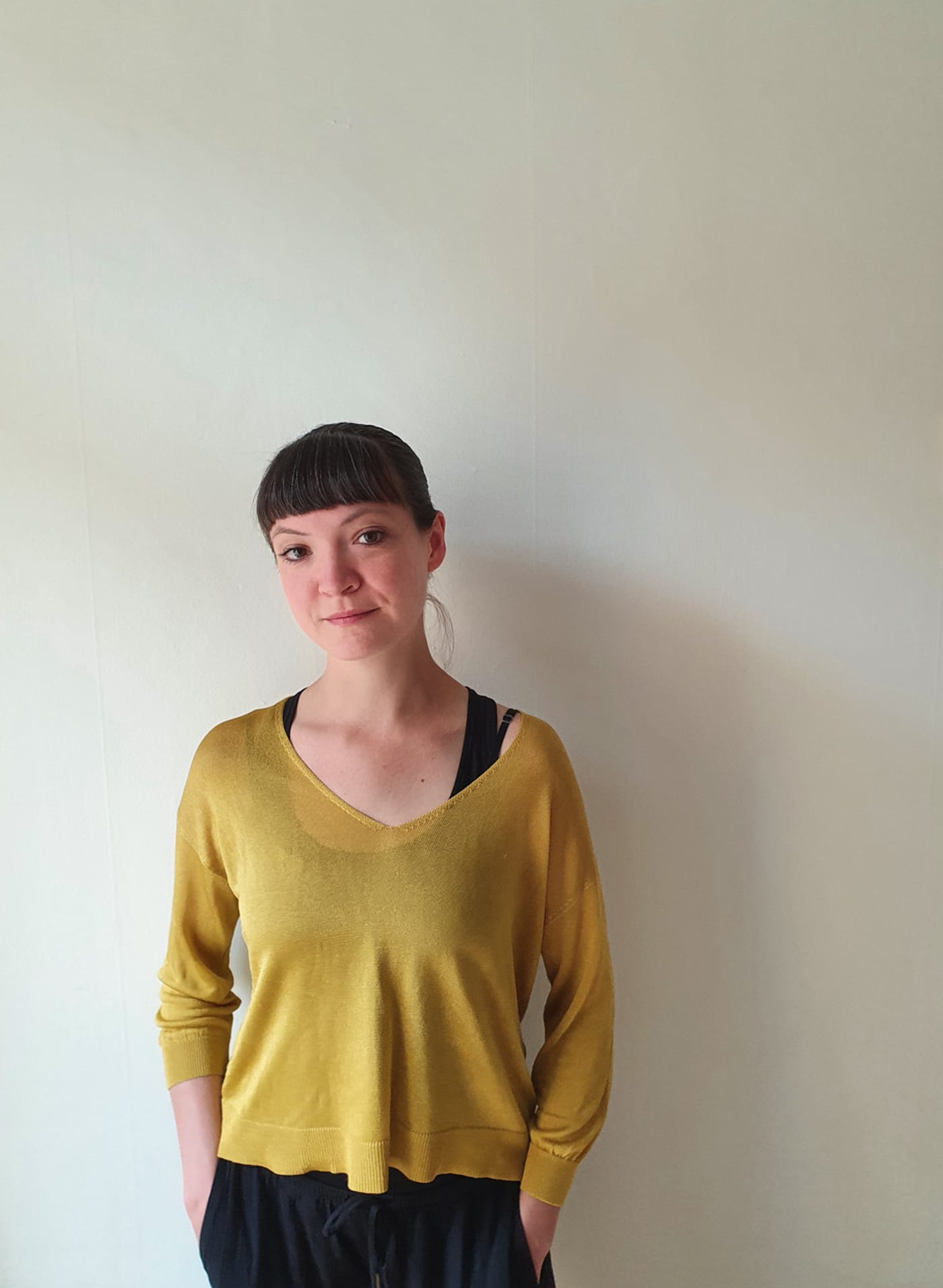
Lisa Nolte (Bild zVg)
KATHARINA ROSENBERGER: I believe we have some great leaps in store for Zurich, and that's due to the successful combination of acts and artists we bring together. For example, our opening concert features freshly composed, bold new chamber music works with electronics by three emerging female composers from West Asia, performed by the fantastic Ensemble Contrechamps, combined with the duo «Whormholes», consisting of two pioneers from the Lebanese free improvisation scene. They not only create sound but also immerse their audience in a whirl of projected live drawings with fluid colors. And the grand finale of the evening is shaped by Shiva Feshareki, an Ambisonic turntablist.
Or, on Friday, 1 December, our borderline club culture showcases a spirited young generation of sound art collectives: Spectres from Zurich and Frequent Defect from Beirut. These are highly talented performers and DJs who will set the dance floor on fire well into the dark winter night.
KATHARINA ROSENBERGER: For those who open our 2023 programme booklet, it serves as an immediate reminder that we live in a reality marked by crises and violence. What is the role of a curatorial team in times of crisis? Regarding the concept of «curating the future,» what visions and goals would you formulate in this context? Where should the «LEAP» ideally lead?
LISA NOLTE: I believe it's important to strike a balance between addressing and negotiating crises in our offerings, without falling into alarmism but acknowledging that most of these issues are too complex to be conclusively reflected in a single production, for instance. Art thrives on not being dependent on click rates. This brings us back to the topic of «we always need more time.» This also includes time windows for escapism, which music, more than any other art form, can open. Therefore, I hope that with «LEAP», we are moving towards a festival or platform future where both the reality of life and the joy of life have their place.